The Obscurer

Jumped Up

Yesterday our aging Rover 216 sailed through its MOT*; much to our surprise, and that of the mechanic at the garage who, following a cursory look at our car, was astonished and gutted to find that, try as he might, he was unable to locate anything he could fail it on. As a treat we decided to splash out on a full service in celebration (and as compensation of sorts for the mechanic.) It looks like we can put off the search for a replacement car for another year.

But the Rover still has its problems. If I don’t drive it for around a week the battery goes flat, and so I am becoming a dab hand at dragging our less aged and more reliable Zafira over, jump-starting the Rover, and then fiddling with its remote key to get it to re-sync with the alarm, which usually entails removing the remote’s battery and faffing about a bit. Perhaps, then, I should still consider trading up to a newer, smarter, snazzier car, one more commensurate with my standing as Cheadle’s premier blogger†?

In the meantime, however, since jump-starting my car has become part of my regular routine, I decided to check that I was doing it correctly – I don’t especially want to electrocute myself, or set fire to one or both of my cars – and so I did a Google search to confirm what the approved technique is.

And I came across this from the Motoring pages of the Telegraph where Nick Comfort has the same problem as me, only to a greater degree. It is no consolation to find someone worse off than you are, and if you do have a second-rate vehicle inferior to my doughty Rover than you have my sympathy; but that is the situation Nick finds himself in, lumbered as he is with an Aston Martin DB7. Apparently

Many Astons have starting problems. Their electrical systems drain a 12-volt battery if left for more than a few days, and only the newest ones have a sleep mode. In four years of DB7 ownership I have got through three batteries.

I already had a trickle charger to plug into the cigarette lighter, which was fine except that I had to feed the lead through the window, which entailed leaving the alarm off. Aston Martin has now supplied a charger that feeds a socket in the boot and exits under the lid so the alarm can stay on.

Last winter, however, I was without this device and my Aston’s battery was flat just a day after a 200-mile run.

Now I’m pretty confident that even my knackered old banger would start first time under such circumstances, and this tale puts me in mind of a recent story a friend told me: that lately he had taken his Merc to a garage for a service and had been informed that the spark plugs had fused in place. A common enough problem, apparently; common, that is, on the Austin Healey and cars of a similar vintage, but a fault that had been rectified by most manufacturers since that time by utilising different metals, though not, it seems, by the good burghers at Mercedes-Benz. This problem was compounded by the fact that the spark plugs were conveniently located in such a position that only the complete removal of the engine would allow access to them, at an appropriate cost.

So while the grass may look greener on the other side of the troll bridge it can sometimes be better to stay put, and so I’ll take my Rover over an Aston Martin or a Mercedes for the time being. In any event, my car is a beautiful pearlescent purple colour, it would look even nicer if it ever got washed, probably, and it’s now my son’s favourite car since we got shot of our even more knackered Rover 420‡. Yes, I think I’ll stick with it; at least for as long as the rust still holds it together.

* Update: the garage has just called to tell me that they’ve found in the service that the brake discs and pads could do with replacing. That’ll learn me to be so smug.
† That is to say I’m the only one I know of.
‡ The loss of which he is still just coming to terms with, as is his idiosyncratic way.

A Question Mark

I received a flurry of email newsflashes last week from Manchester City Football Club. First the shock news on Monday that Sven-Goran Eriksson and the club had “parted company by mutual consent,” then the follow-up formality on Tuesday that Hans Backe and Tord Grip had also left the club. The surprises continued on Wednesday when a third email informed me that “Manchester City & Sven-Goran Eriksson have parted company by mutual consent” (I think someone pressed the wrong button) before a further email 25 minutes later announced that “Mark Hughes has been confirmed as Manchester City’s new manager.” My final correspondence the following day announced that Hughes had just given a press conference, and then it all went quiet. It had been quite a half-week.

A lot has been said about the Sven situation, and I was obviously agin his dismissal, but I decided to keep my powder dry, for everything to be settled before I said my piece. Then, a 5th birthday party and a 6th wedding anniversary intervened, diverting me (in the nicest possible way) from finishing this rambling, overlong discourse, but here it is now anyway, for what it’s worth.

First of all, despite the current well-aired criticisms of the sacking (yes, sacking) of Sven, it is worth saying that when he arrived he was not universally welcomed. I don’t think there was much outright antagonism, but there were quite a few misgivings from many City fans bearing in mind his reputation as England manager. In the end there was generally a wait and see approach, accompanied with the back-handed compliment that Sven had a proven record as a “good club manager” (whatever that means) who had won trophies wherever he had been; a record that was bound to founder at Eastlands, regardless of how long he stayed there. I’d say I was happier than most at Sven’s appointment, primarily because I was less critical than most of his time at England, where I felt it was hardly his fault that his team failed to live up to the unrealistic expectation placed upon it (although there were plenty of errors during his time there that he can lay claim to and call his own.) As City kicked off the season at breakneck pace, seemingly invincible at home and pretty useful away, most reservations disappeared, and I was happy that we had undoubtedly improved upon the previous season’s shambles, but cautious that our results were exceeding the quality of our performances, and that something was likely to give at some point.
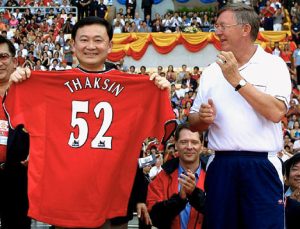
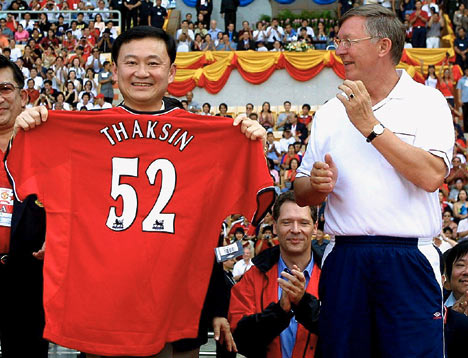
Before the start of last season there seemed less talk around about the purchase of the club by Thaksin Shinawatra. There were a few grumblings for sure, but amongst the fans the majority seemed not to care about his background or the fact that here was another moneybags owner who was going to skew the league ever more in the direction of the big spenders (indeed, that constituted most of his appeal), and this opinion didn’t seem to change over the course of the season; some even cheered his allies’ success in the Thai elections a few months ago as another feather in the cap for “Frank”. Personally I was extremely uncomfortable with his involvement, in part because of the allegations of corruption and human rights violations that hung around him, but also because I don’t like this trend towards ever deeper pockets buying success in football, even if it is currently our good fortune to be one of the beneficiaries. You will never get perfection I know, but I would prefer for us to be moving towards a situation where a club’s success was mainly down to appointing a canny manager who could handpick promising, talented players to blend a team that plays in the most entertaining way. I can’t tell you how much pleasure it gives me to go to the Premier League page on the BBC Sport website and double-take when I see a Hull City hyperlink staring back at me; but wouldn’t it be even better if we thought it possible that with a few key signings they could rise up the league and even challenge for the title in a few seasons time? Instead we know they will be fighting the drop until the day they are relegated, and it seems we are heading in the opposite direction to the way I would wish, ever further towards a league where the teams that succeed are purely the ones with the with the most pounds, dollars or bahts. You could argue that it is just this trend that has led us to the situation where the Premier League is the strongest domestic competition in Europe, but who benefits? Not the majority of fans I know who couldn’t care less what happened in this years’ European Cup final.

As last season began I had no interest in what happened to my team, genuinely feeling that the club I had supported since a boy was no more and that the team now playing in sky blue were a new club – Thaksin’s – bearing an historic name; interestingly that emotion is one I have heard a lot of other people express more recently. But when I saw Richard Dunne wearing one of those blue shirts on the first Match of the Day of the season such feelings disappeared in an instant, but my doubts about the direction the club would be going in didn’t. “Prove me wrong, Thaksin,” I thought to myself, and with Sven’s hasty and blinkered dismissal my worst fears seem to have been realised, although I won’t say I told you so (especially when stories like this show how ridiculous it is to lump all foreign / rich owner together as if they are inevitably as one.)

Let’s be honest though. Taking last season in isolation Thaksin’s involvement has hugely benefited the club. It was his money that brought Eriksson, Petrov, Corluka and Elano to Eastlands, without his involvement we would never have finished where we did in the league. We are not the first or only club to sack a manager prematurely – indeed City are past-masters at it – but few dismissals seem as out-and-out stupid as does Eriksson’s. So thanks for last season, Frank, but since I am intending to support City until I die I am also looking to the future, and that is where I am concerned. So what of the future, and how will this episode affect it?

For Sven the future looks bright; he’s not all that bothered by events I’m sure. He’s rehabilitated his battered reputation in England, received a tidy bit of compensation, and now has another new job to look forward. In all he’s probably better off out of Eastlands, he’s sorted. But what of the future of the other actors in this story?

On the playing side of the club, in the immediate future there is the fact that Richard Dunne, the rock of our defence, apparently wants away; how much has his desire to leave got to do with the sacking of Eriksson I wonder – how will other players react when their contracts are up for renewal – and how easy will it be to replace someone who currently seems so irreplaceable? He certainly won’t be replaced by paying silly money to Ronaldinho just because we can as has been mooted, a deal that, if it goes through, seems more comparable to the time Melchester Rovers signed Spandau Ballet’s Martin Kemp than to an incidence of a serious football club building a team to challenge for a trophy.

Before the appointment of Mark Hughes I worried about who would accept the job, and why. I have no axe to grind with Hughes, regardless of the identity of one of his previous employers, and he has a promising record as manager; but what chance that promise is given the time to further develop at City? The sacking of Eriksson itself suggests an impatient, short-termism from the owners of the club, and short-termism can breed a short-termists, mercenary strain of manager who will happily sign a three-year contract knowing that the worst thing that could happen is for him to be sacked mid-contract and to be paid off handsomely. I don’t want to malign Mark Hughes’s motivation, but if I were him and considering trading in the stability of Blackburn for the supposed risk at City it would be a no-brainer, win-win situation; he can sign on the dotted-line safe in the knowledge that in the unlikely event that he is given the time to succeed then all’s well, but no matter how badly he fucks it up and no matter how short his reign he will still get his pay-off and a ready-made excuse that his failure was down to his inability to work for Thaksin. Then he can still get a new job based on his unblemished Wales and Blackburn CV.

And finally, to Thaksin himself; what has this episode done to his reputation, and what does the future hold? Well the main thing that has happened is that many of those who weren’t interested in his background in Thailand before and didn’t care what effect a monied and dictatorial owner would have on the club in particular and football in general have changed their minds. Football fans can be a fickle lot, and no one will mourn Sven’s passing or brook criticism of Thaksin if the club goes from strength to strength from here on is. But I can’t help worrying about just how many managers we may have to go through – at a potentially diminishing rate of return – in the hope that one may fluke a bit of success in their first season; and if success doesn’t come, how long before Thaksin becomes bored, loses interest, packs up and moves on? And if that does happen, where will City be then?

Chameleon Day

Immigration Minister Liam Byrne, glottal stops and all, was on Radio 4’s PM programme yesterday, discussing his plans for a “British Day” bank holiday. Apparently he has canvassed opinion and he feels the “idea…has really caught on” that we need “an opportunity, permission, if you like” to celebrate Britishness, and so he has selflessly decided to promote the idea; it certainly has nothing to do with Gordon Brown having banged on an on about the concept for ages, and we can also disregard the fact that most of the public will agree with any old spurious reason to have a day off work.

Unfortunately the tight-fisted git isn’t proposing that we get an extra holiday to celebrate our country right or wrong, rather the existing August bank holiday is to be requisitioned for the cause: the fact that this holiday is already the date of the Notting Hill Carnival, Manchester’s Mardi Gras and the Lower Puddleton Annual Summer Ram Roast and Tombola, events that may not want to be roped into this all new homogenised celebration, seems to have concerned Liam Byrne not.

But when PM’s Eddie Mair pointed out that choosing the August bank holiday for British Day meant holding it on a day that wasn’t a bank holiday in Scotland, Byrne began to get himself into a bit of a tangle. He maintained that some time in summer – and preferably at the end of August – would be the best date to hold this celebration; in other words, no move from the August bank holiday, as far as I can tell. Mair countered that this would still mean that this proposed British Day “in and of itself excludes Scotland”, and that while the Scots do have a summer bank holiday, it is at the start of August. Byrne reiterated that the end of August would be better, for no particularly good reason other than that lots of people are away on holiday earlier in August; although presumably no more or less than later in the month I would have thought, and the Scots are seemingly currently unfazed by this fact. Eventually, after several unconvincing defences of his position Byrne finally fell back on the phrase “all I’m trying to do…is actually to get this debate started”. To which, Eddie Mair, seasoned as he is in dealing with this piece of rhetoric, would have been well within his rights to have said “No you fucking weren’t! You were stating your opinion. Now; is it your opinion or isn’t it, fuckwit?”

And that’s all I’m really bothered about here; this incremental increase, year on year, in the number of people who when challenged on their opinions think it is acceptable to use this piece of sophistry, to excuse their stated viewpoint by claiming they only meant to “start a debate” on the subject. Who do they think they are, deciding unilaterally to start an impromptu discussion on a matter? Don’t they know that by law you have to be a Dimbleby to do that?

But you know, I really don’t mind people using the phrase when they genuinely want to open up a debate on an issue at hand; it’s just that usually they don’t. These are mere weasel words, worse than management speak, an attempt, when criticised, to wheedle out of any responsibility for your already declared position, to strike a pose of neutrality on a subject you clearly felt strongly enough about to have raised in the first place. Whatever happened to just stating your opinion, defending it, and sticking to it? Then, if someone raises a reasonable critique of your plans you can have the decency to accept that you may consider any contrasting opinions or objections, that you are open enough so that when the facts change you can change your mind. Anything, anything rather than this deviousness, this cowardly backsliding, this transparent attempt at deflecting criticism rather than tackling it head on.

Whenever we see someone who inappropriately claims that they are merely trying to “start a debate” on a matter we should boo them – and hiss them – at every mention of the phrase, don’t you think? Or perhaps that’s a bit harsh; I’m only playing Devil’s Advocate to be honest with you, just taking up an extreme position in order to get the ball rolling, for others to avail themselves of this blog’s comments facility to discuss the matter amongst themselves, to, you know, what’s the phrase…?

Herbert And The Watermelon Of Doom

“Watermelon” they shout, and the “they” in question are idiots. But there is perhaps just a nugget, nay a kernel, perhaps a smidgeon or even a grain of truth in that insult what “they” so easily hurl.

It’s a good term, is “Watermelon”. For those who aren’t in the know it is used by some to describe an old-style socialist who masquerades as an environmentalist in order to surreptitiously campaign for their sneaky statist goals; they are green on the outside, red on the inside, geddit? And they will exist, such folk; no doubt the term can be accurately applied to some knackered comrades who have surmised that the best route to achieving their dream of getting government to muck everything up is by going in via the green back door, just as during the ‘eighties the Labour party enjoyed a rapid conversion from being a broadly anti- into a broadly pro-EU party in order to palm continental-style social policies into Britain under the noses of the Thatcher government.

But I think such things can be overstated. I reckon most environmentalists are naturally of a more leftist bent in the first place, for whatever reason. It is just the way things are, and I don’t pretend to understand why, but some issues do seem to exhibit some strange, almost symbiotic relationship with a particular political wing for no obvious reason. While lefties tend to be more environmentally conscious, righties are seemingly more likely to be anti-abortion. This makes no sense as far as I am concerned, but as we have seen this week there is evidence all around.

But if we at least acknowledge that some people are genuine Watermelons, that they are not just greens who happen to be red but socialists who feel that the best way to advance their cause is by posing as environmentalists, then where is the balance, the yin to the yang, that equal but opposite reaction; or perhaps the even greater reaction? In other words, where is the term to describe what is for me a far more likely scenario; of someone who is a free-market anti-government type who opposes environmentalism instinctively, not because of the science (such people are rarely scientists) but simply because the response to climate change implies a reliance on government action that they simply cannot countenance? They are the mirror of Watermelons in that while they may pose as honest brokers simply putting an alternative view to all that shrieking global warming propaganda, in reality they will grab hold of any rogue paper going that shows that there isn’t a problem, so to loudly pronounce that all is well and government can stay in its box, as their dogma demands. Their creed of minimal state intervention has no answers to the problems raised by concerns such as climate change, and so it must be denied for its own sake.

In the interests of fairness then we need an antonym for Watermelon, but what should it be? Cantaloupe? Dry Lemon? I reckon a nice acronym would do; TWiTs, perhaps, although I can’t think what those initials would stand for. But this surely cannot be beyond us, and once we have solved this problem and identified the Watermelons’ natural enemy then perhaps we can think of a moniker for those (other?) people who, whilst complaining about the welfare and nanny states and the dependency culture they have spawned breeding feckless scroungers who expect the state to wait on them hand and foot, then object that they themselves are far too busy to even sort their own fucking rubbish into a few simple piles prior to collection for recycling and want the council to come along and do it all for them. Because they’re out there too; I just know it.

Were All Going To Hell

Apostrophes can be a problem; just ask those brain boxes on The Apprentice who on last week’s programme debated for around three hours whether it should be Single’s Day, Singles’ Day or Singles Day. (Singles’ Day, in my opinion, as it is both plural and possessive.) But who hasn’t made the odd mistake, writing “it’s” instead of “its”, or “your” instead of “you’re”, out of sloppiness, say, even when we do know the correct usage?

However, this, from the ever-entertaining GrammarBlog, really does take the prize.

The sheer weight of the apostrophe misuse here is astonishing; these are no mere typos, rather the work of someone whose grasp of the written word is so poor that “Punctuator’s” should surely join the rest on this list of the damned.

My favourite punctuation error has got to be “Thieve’s”, a word that is so commonplace and this attempt at writing it so wrong that a tiny child could spot the error at a glance; even “Thief’s” would be an improvement, although then I would be curious as to just what it is, belonging to the thief, that is in need of repenting. For different reasons I also love the inclusion of those pesky “Sport’s Nut’s” on the list; the realisation that they, along with “Loud Mouth Women”, “Effeminate Men” and some others will also get short shrift from St. Peter come the day is highly enlightening. I’m even more glad now that I abandoned my City season ticket a few years ago.

And what’s all that about “High Fallutent”? Do they mean “High Falutin’”? Or even, “High Fallutin’’s”? Perhaps even they don’t know.

PostScript: Please feel free to point out any of my grammatical errors in the comments box; it’s the only way I’ll learn.