I’ve said before that I think Harry Hill’s TV Burp is just about the only thing worth watching on ITV these days. Do you watch it? Only wondering, you see, because it seems that the advertising agencies of the nation can’t think anyone does. Over the weekend the ad-break for TV Burp consisted entirely of promotions for other ITV programmes; plenty of Dancing On Ice and Jane Austen, even Elton John’s Birthday Party FFS, but nothing about soap powder or even tea bags. I find it bizarre; when even the lamest programme at any hour on Ftn seems able to fill its breaks with proper adverts I can’t figure out why the best programme on the most popular commercial channel can’t pay its way. Whether it is down to ITV, the advertising agencies, or the lumpen skulls of the great British public I cannot tell.
Presumably Harry Hill has hitherto been subsidised by other areas of ITV’s programming, such as the profits from ITV Play; in which case I think I have found the only reason to lament the station’s demise following the recent scandals over faked phone-ins on TV. If the removal of the channel does coincide with TV Burp’s demise then I may have to rethink my attitude to crap like The Mint.
It is a strange business this whole palaver over the phone-in competitions. I don’t actually see much of a problem with the ITV Play / Quiz Call type of phone-in; calling in for such shows seems such a transparent waste of money that with perhaps a tweak or two I don’t see why they can’t continue to offer a service to those people with more money than sense who really should know better but apparently don’t. On the other hand the Richard & Judy / Saturday Kitchen type incidents, where people were asked to phone in for quizzes they had no chance of winning, is a different matter altogether; words fail, although a word called “fraud” will probably do.
The Blue Peter incident, I think, is especially telling. In that instance, when faced with a technical fault on the competition’s phone lines, the producer continued to allow calls to be accepted and charged for and roped in a child who was on a studio visit to pretend to phone in and so “win” the prize, maintaining the appearance of a genuine phone-in. Astonishing behaviour indeed; you or I, if put in the producer’s shoes, would no doubt just apologise for the fault and cancel the phone-in. That the real life TV producers didn’t do this, and that they seemingly didn’t consider there to be anything wrong and/or illegal in taking the action they took, I think shows how so much of television is artifice in the first place; that producers and programme makers so routinely twist and bend the dull truth into a convenient and palatable reality that it didn’t occur to them that they were overstepping the line on this occasion.
But I think the real shocker here is that this is not the first of Blue Peter’s deceptions. On a news story last week it was revealed that in the ‘sixties the original pet dog Petra died after a few days and was secretly replaced with another puppy without informing the viewers. This came as a body blow to me. I remember that when Petra (or should that be the replacement Petra) died Blue Peter informed viewers that they could send off for a free colour photograph of the dog, and for some reason my parents insisted I write in. Eventually we received our photo, only it was in black and white, not colour, and with a note attached apologising and explaining that they had run out of colour prints. Run out? How odd it seems in this day and age; when digital photos can be printed on demand it sounds a poor excuse to say you just “ran out” of colour photos. But even at the time; what happened to the original colour negative? Did someone stand on it? Did they just print a load off and chuck the negative in the bin? Surely they could have gone down to SupaSnaps and got a few more printed off, even in the ‘seventies? But apparently not.
Anyway, I can now clearly see that the upshot of the whole tawdry affair is that I ended up with a substandard photo of an impostor I didn’t even care for in the first place. I liked Shep.
I had been wondering, you see, how little seems to annoy economists more than when boneheaded thickos like me refuse to unreservedly accept that the minimum wage is a bad policy that costs jobs. Why can’t the public get it into their daft heads and just accept that the policy is flawed because real economists instinctively oppose it?
This assumption, of economists’ antagonism towards the minimum wage, took a bit of a hit when over 650 of them – including some prominent names – signed this declaration that argued in favour of just such a policy in the US, stating that “a modest increase in the minimum wage would improve the well-being of low-wage workers and would not have the adverse effects that critics have claimed” and that “the weight of the evidence suggests that modest increases in the minimum wage have had very little or no effect on employment”. So much then for the economists’ consensus.
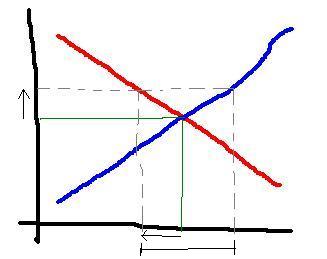
Of course, this was still mocked by opponents of the minimum wage. Café Hayek inducted all those who had signed the declaration into their “Hall of Shame”, stated that the signatories must “believe that demand curves are vertical”, and asked, “how can you sign your name to something like that and call yourself an economist?” That, I guess, is how you maintain a consensus; by cutting adrift and blanking out those who disagree with you.
Now it is a good line of Café Hayek’s, saying that these rogue economists believing in a vertical demand curve, but I think you can get too hung up on such details. I remember being told about the unemployment effects that can be caused by the minimum wage when I studied for my degree, and it certainly makes sense. If memory serves, the diagram explaining it goes something like this.
And before the minimum wage was introduced in the UK I myself cautioned against it, flaunting the meagre economics knowledge I had gained from my shiny new BSc on the subject (many years ago; now my 2:2 looks old, tired and tarnished, and I don’t know where you can buy Duraglit these days).
But surely you don’t need knowledge of economics to see the harm that a minimum wage can do? You can forget curves and their angles; at its heart the idea is simple. An increase in the minimum wage means an increase in costs for any business that employs people on the minimum wage. Businesses have to deal with that. They may absorb it from their profits; they may pass the increased costs onto their customers in the form of higher prices; but some may seek to cut costs as a consequence of the increase in their wage bill, and one way to cut costs is to lay off staff (or reduce their hours). In addition, for some firms an increase in the minimum wage, and so costs, may be the difference between just staying in business and going bust. True, such companies are likely to be in a pretty precarious financial position as it is, and just as likely to go bump with the next strong gust of wind; but still and all, the inevitable consequence of a minimum wage is that some people may lose their jobs.
But why single out the minimum wage for such criticism? If you want to rail against the minimum wage, why not rail against anything that imposes costs on companies? Health and safety laws for example, not just the frivolous kind that make the front page of the Daily Mail, but any such intervention that puts helmets on builders’ heads or prevents lorry drivers from mimicking a single-crewed Le Mans race while on the road? Or interests rates? Perhaps we should never raise interest rates because that too can cause problems for business and increase their costs? We should never raise interest rates, for whatever reasons. Or increase taxes under any circumstances whatsoever. I don’t know what we should do when commodity prices rise, but we had better think of something soon.
Of course we can’t do much about the price of commodities on a global market, so business will just have to deal with that. And taxes, and H&S laws? Well again, they are clearly needed at some level, so we must grin and bear them too. Interest rates? Well, obviously, they may have to rise at times, for the greater good, to control inflation or whatnot, as long as they are raised at a careful and sensible level, as long as we don’t go mad and quadruple them overnight. But can’t the same apply to the minimum wage, if it is introduced or raised at a sensible rate? I see loads of adverts in shops and pubs near where I live advertising for staff at the minimum wage, not a penny more. They don’t seem to be looking at redundancies, quite the opposite, and God knows what they would be offering if they weren’t forced to pay more. Can’t the minimum wage be seen in the same light as health and safety, tax and interests rate rises, as something that may need to be done to protect certain parts of our society even if it can also have some negative effects?
Great if you are the one getting the pay rise, it could be said, not so great if you are the unfortunate one losing your job in society’s reshuffle as it digests the increase in labour costs. And it is true, for every action there can be an equal and opposite reaction, and unintended consequences too. But for me, I would take this criticism of the minimum wage more seriously if those making this point and shedding tears for the losers from a minimum wage didn’t tend to find their tears drying up when discussing the jobs similarly lost through offshoreing and globalisation, through industry consolidation and productivity drives, or any other form of profit chasing that can cause job losses. If you think a policy is justified then you think it is justified, in spite of the negatives consequences (just as long as those negatives don’t outweight the positives).
But need there be job losses because of a rise in the minimum wage? Not if you think that the demand for labour is vertical, ha ha. Unfortunately for Café Hayek, their opponents who signed that statement in favour of a minimum wage rise don’t believe this either. They clearly state that a rise in the wage will have “very little or no effect on unemployment”; so they accept the possibility of job losses. Even then, though, I have to ask; how do you view economic models? Are they precise, are they definite, are demand curves perfect sloping lines you can fix a point upon to show the impact of policy decisions? I’m not an economist so I wouldn’t really know, but I say not.
Take the Laffer curve, the theory that states that a cut in the tax rate can lead to an increase in taxation revenue. It is often denounced as a “back of the envelope” theory that cannot be proven, but really it is an accurate truism. At a 0% tax rate there is clearly no tax revenue, while at a 100% tax rate there is still no revenue because everyone will bugger off to a more benevolent country with a generous 99% tax rate. Between these two zeros there must be some sort of curve of tax revenue that rises then falls as the tax rate increases. If you are the right side of the apex of the curve then in theory you can cut tax and still see an increase in revenue. This is no good for policy making – no one knows how the curve is drawn, or where we are upon it – but as an insight into how things work I think it is useful.
And I think the same holds true for demand curves. Of course they slope down, and that is good to know. More people will want to employ me if I say I will work for £1 an hour than if I want £100 an hour. An employer who may be happy to employ me for £1 may tell me where to go if I demand £5.52. So the minimum wage is bad and causes unemployment, no?
But what of the demand curve for Rolls Royce cars? Is that vertical? No, it too clearly slopes down. Demand for a Rolls Royce at £15bn a car? Nil. For £15? Loads. But; taking the current price of a Rolls Royce (which I confess I just don’t know, I’m really not in the market for one), would demand fall if the price rose by 1p – a “modest increase”, as the signatories of the pro- minimum wage statement ask for? No it wouldn’t. What about £1. Clearly not. £100? Unlikely. £1000? I still doubt buyers of new Rolls Royce’s would even blink at such a price rise. £10,000? Now you’re talking, probably. A £10,000 increase in the price of a Roller would hit demand for the vehicle, so the demand curve for the things does slope downwards, it isn’t vertical; but that doesn’t mean that any price rise will cause a reduction in demand. Actually, I don’t know why I picked such a strange example. What about something simpler, more down to earth like a Mars bar. Will demand for them fall if the price rises by 1 or 2p? Will it balls, but economic theory suggests it will. In short, theory suggests that as price rises, demand falls; in practice, price often can rise with nish effect on demand, especially if such a rise is in line with inflation. I think the demand curve, like the Laffer curve, should be viewed as a general illustration of how economics works rather than as a precise analytical tool, or a blunt ideological instrument of scientific fact.
So we’re agreed are we; that a minimum wage needn’t be opposed in principle, it can be accepted as a necessary tool in the policy makers’ toolbox even if, like other elements of policy it can have some undesirable effects, and it may not even cause these side effects anyway? Good. But in reality, is it the best way to help the poor and the low-paid? Ah, well, that is a different question altogether.
At times it seems as if it is open season on the supermarkets, and especially Tesco, the UK’s largest retailer. In the same way that Barclays – by virtue of its dominant position in the banking sector – is the first to be attacked for closing branches, outsourcing and imposing punitive bank charges, so disquiet about supermarket practices in general often becomes condensed into specific complaints about Tesco in particular.
Last week’s BBC1 programme Shopping The Supermarkets, and Monday’s Dispatches programme The Supermarket That’s Eating Britain on Channel 4, are recent examples covering familiar territory. Local councils, like mine in Stockport, are bullied in the planning stage and Tesco builds stores that breach planning permission; they hold “land banks” that reduce competition by blocking other retailers from developing sites; they squeeze suppliers into bankruptcy from their powerful oligopsonistic position; they exploit numerous tax loopholes whilst cosying up to government; and they have really, really irritating adverts (sorry, that last one wasn’t on Dispatches list, it’s just one of my bugbears).
Dispatches also highlighted the Clubcard scheme whereby customers’ purchases are monitored and scrutinised, providing a wealth of information ascribed to each individual so that discount vouchers can be posted out tailored to our disparate needs, so that our every whim can be twisted, teased and coerced into profit. Such data mining raises some privacy concerns, and it is this matter that forms the subject of this post, and which has determined why I feel Tesco and its cohorts must be engaged in battle and defeated.
For instance; take a look at this section from my Clubcard statement that arrived this morning. Ignoring the general voucher for the princely sum of £2 which I can spend as I like, we see below the unique, targeted vouchers for my use as prescribed by that infamous, omnipotent database. So, drawing on my many years as a Tesco customer, following the trends as I turned from callow youth into a callow father-of-two, let’s see what they make of me.
You may not be able to empathise, but reading the coupons I feel a distinctly eerie feeling, like someone has just walked over my grave. How do they do it? What witchcraft is this? How could they possibly know that I drink milk? And eat bread, fruit and vegetables? That my wife uses cleaning products? Or that I take all my goods home in a bag? Truly the power of Tesco is mighty, other worldly. I feel invaded, violated, as if someone has been dipping around in my brain, has delved into the depths of my very soul.
Join me. Help me to fight this menace, before Tesco discover other secrets about me – that I wear clothes, shoes – and send me unsolicited vouchers for them too. They must be allowed to go no further. This must end here. Now.
Antony Worrall Thompson today hit out at those who have recently questioned the integrity of his ITV1 programme Saturday Cooks Live, and its spin offs, Daily Cooks and Christmas Cooks, following the criticism that for a show that pretends to be about promoting innovative and inventive culinary ideas, being sponsored by McCain Oven Chips makes it look a little bit silly.
Speaking from his home in Oxfordshire, Worrall Thompson retorted
We have nothing to apologise for. McCain insist on using only the finest quality Maris Piper potatoes in their Oven Chips. They are low in salt, sugar and saturated fat – a boon in these health conscious times – and are the perfect accompaniment to Chicken Dippers and Pizza Fingers. Or why not try them in a sliced pain rustique along with just a light sprinkling of Cayman Island sea salt and a splash of 15-year-old balsamico di Modena?
Once we had stopped our tape recorder, Mr Worrall Thompson continued
What the fuck was that all about, eh? Why is it always me you get stuck into? You never go after Gordon Ramsay do you? Oh no, because he’s a “real chef”, while I’m just a “celebrity chef”. Oh really. For Christ’s sake he’s on telly more often than I am! You’ve not had a pop at him for advertising Thresher have you? No, it’s always Wozzer that gets it in the neck. I mean; Thresher, for fucks sake. Talk about falling between two stools, stuck in no-man’s land between Oddbins and Bargain Booze, with Tesco doing the same only better and cheaper and open 24 hours a day. “Wines you can swear by”. Oh that’s clever isn’t it? Well I can swear too. Damn right I can. Cockflaps! There you go, that’s a swear word I’ve just invented. Cockflaps! It’s pathetic. I know the media are always going to be more interested in megastars like that blogger Guido Fawkes or whatever his name is, but on the quiet lesser celebrities like Gordon Ramsay are just as big hypocrites but get a free pass from you lot because they’re not as famous. I tell you, he gets away with murder.
It is believed that McCain fought off stiff competition from both Bachelor’s Super Noodles and Campbell’s Meatballs for the deal to sponsor Saturday Cooks Live. Rumours that Bernard Matthews was interested in using the sponsorship to relaunch their Turkey Twizzler brand could not be confirmed. We did try to contact them but their phone line was continually engaged and does not accept BT RingBack.
This is the second sponsorship row ITV has been involved with in recent weeks. Their genealogy programme “You Don’t Know You’re Born” was criticised as being little more than a piss-poor rip off of the rival BBC show “Who Do You Think You Are?” and simply a sorry excuse to publicise Genes Reunited, the programme’s sponsor and a division of Friends Reunited which ITV recently bought for £120m. On that occasion ITV defended itself robustly, stating that before the show was broadcast their lawyers had assured them that the format, credits and music for the show, while being almost identical to the BBC version, where technically different enough to be “just this side of legal”, so that although it was “as plain as day” what they were up to, the chance of being sued for a copyright infringement was “really quite slim”.
I’m a hero, apparently. I’ve always wanted to be a hero, and now I discover I am; and it’s not just me who’s saying it. No lesser person than the Archbishop of Canterbury, when speaking at the launch of National Marriage Week, has stated I am a hero; and all because a few years ago I spent more money than I had on a fuck-off big party.
This again. The biannual news story that marriage should be promoted because married couples are more likely to stay together than unmarried couples, and that children tend to do better when being born into married families. It is getting tiresome.
First of all, what’s it got to do with the church? I can see why Rowan Williams would want to bask in the reflected glory of the seemingly favourable statistics associated with marriage, but would that be fair? I was married in a civil ceremony, and one of the rules of such a wedding is that there can be no mention of religion at any stage of the service. As a result it was touch and go at one stage whether the music we picked – Ennio Morricone’s score for the film The Mission – would be allowed. Therefore, surely religion should similarly be explicitly excluded as a potential cause of my successful marriage, and those of my many friends who were also married in civil ceremonies?
Secondly, I wasn’t born married. My wife and I went out together, lived together and even got up to cheeky nonsense together for over four years before we were wed. Would Dr Williams have been critical of our arrangements had he met us at the start of June 2002? Did that much change by the time we were sipping champagne a few days later? We were still the same people, with the same devotion to each other.
And today; am I dedicated to my wife because I am married to her? I don’t think so; that statement is surely putting the cart before the horse. I am dedicated to my wife because I am still in love with her, always will be. It is because I am dedicated to her that I am married to her, not the other way round. I don’t think marriage as an institution can take any of the credit.
But can marriage help keep couples together? Perhaps. I can imagine some people being in the situation where they feel the need to fight to save their marriage, when if they were in a different type of relationship (at least one without kids) they may not feel there was anything to fight for. It is a moot point whether that is a good or bad thing – should you fight to stay with someone just because you are married to them; if you are having to fight, should you really be with them? – but no doubt there are people who have stayed together simply because of the marriage, and the relationship has subsequently flourished once the tricky spell is over. But surely that only works if you value marriage in itself in the first place; simply promoting marriage to people who aren’t inclined to get wed can only be good news for the divorce lawyers. The statistics that show married relationships as being more stable surely just prove that stable couples are more likely to get married; if more people were to get wed simply because they have been cajoled or incentivised by the church or state I can well imagine those statistics converging over time.
Why get married then? Well how about for the same reason I did; simply because I wanted to. The benefits of marriage are intangible, and so they should be. My wedding was the best day of my life, without doubt, and we treasure our memories of that day. I’ve never worn jewellery but I love wearing my wedding ring, not because it is an attractive and valuable chunk of gold, but because it is a link to and constant reminder of my wife. I didn’t have to get married, no one should have to, but I wanted to and I’m glad I did. But I don’t think it has any bearing of the success of our relationship.
So is marriage the “glue that holds society together” as the Telegraph’s editorial predictably puts it? I don’t think so. It may do some good work at the margins, persuading some couples to give their relationship one last go, but that is about it. I don’t think you should dismiss entirely the effect marriage can have, but it is important not to build its part either.

 The Obscurer